1. Heat is an environmental stress that negatively impacts human survival. One specific way it disturbs homeostasis is by dehydrating someone. When the body does not get enough water it dehydrates and causes a body to collapse.
2. One way we fight off heat is through sweating to cool down our bodies, which is a short term adaptation, but if we do not replenish our water loss, we become dehydrated. A developmental adaptation would be a persons skin color: If a person has lighter skin, then they burn and dehydrate faster while a person with darker skin is more likely to be okay in the heat. A cultural adaptation would be to wear clothing that is appropriate towards the weather such as shorts, tank tops, sandals, and hats to protect people from heat. A facultative adaptation is human skin pigmentation such as tanning and darkening of the skin color.
3. The benefits of studying human variation would be to help other cultures and people learn about preventing things such as dehydration or sun burns or anything having to do with heat. When a person explores a different habitat, they can take ideas and return them to their community to help others. For example, if people in Africa survive through the heat and sun light yet people in California cannot adapt well to the heat it is best if they learn what Africans do to survive the heat.
4. Race could be used to understand the variations of adaptations because different races do different things to adapt to their environment. Environmental influences on adaptations is a better way to understand race rather then judging a person by their skin color. For example a person could have a black skin tone yet not be African necessarily.
Tuesday, March 26, 2013

Tuesday, March 19, 2013
Language Blog
Part 1:
This experiment was way too difficult for me to do. I had tried to communicate with my coworker Gabby, yet I feel as though it did not go anywhere. I had no idea how to communicate without writing or drawing. I mainly pointed and shrugged my shoulders. I feel like many of the questions were asked by the person I was communicating with and I could only shake my head yes or no. My partners did not alter their way of communication and I feel it was as though they were used to communicating the way they were communicating with me so they did not change it. I feel that if we were from two different cultures and their culture was used to silent communication they would have the advantage because they would be comfortable conversing with no words because that is how they grew up communicating. The speaking culture would most likely find the non speaking culture weird and many would not even want to communicate with the non speaking culture because that is not the normal way of communicating they are used to and grew up with.
Part 2:
This experiment was difficult for me but not as much as the first one. I communicated with my mom and it was interesting because like my mom, I use my hands and gestures to communicate all the time. I was able to last the whole time, yet I really had to think before I was going to reply and concentrate on not making gestures. My mom was laughing the whole time because she knew how I use gestures to talk just like her. She did not become affected at all because she was not restricted from using gestures like I was. The only way that changed was at the end when she used less gestures then when she began. I refrained from asking questions that had to do with size or shape because I became frustrated. This experiment showed how much we rely on using gestures to get our point across in a conversation- mostly in a conversation that is dealing with specific events or measures that need to be acted out. I feel there are people who find it difficult to read body language because I have friends who do not understand some gestures I make to talk and some even take it the wrong way. An environment that would benefit using no body languages would be a hunting environment where they have to stand still as to not provoke and be detected by prey.
This experiment was way too difficult for me to do. I had tried to communicate with my coworker Gabby, yet I feel as though it did not go anywhere. I had no idea how to communicate without writing or drawing. I mainly pointed and shrugged my shoulders. I feel like many of the questions were asked by the person I was communicating with and I could only shake my head yes or no. My partners did not alter their way of communication and I feel it was as though they were used to communicating the way they were communicating with me so they did not change it. I feel that if we were from two different cultures and their culture was used to silent communication they would have the advantage because they would be comfortable conversing with no words because that is how they grew up communicating. The speaking culture would most likely find the non speaking culture weird and many would not even want to communicate with the non speaking culture because that is not the normal way of communicating they are used to and grew up with.
Part 2:
This experiment was difficult for me but not as much as the first one. I communicated with my mom and it was interesting because like my mom, I use my hands and gestures to communicate all the time. I was able to last the whole time, yet I really had to think before I was going to reply and concentrate on not making gestures. My mom was laughing the whole time because she knew how I use gestures to talk just like her. She did not become affected at all because she was not restricted from using gestures like I was. The only way that changed was at the end when she used less gestures then when she began. I refrained from asking questions that had to do with size or shape because I became frustrated. This experiment showed how much we rely on using gestures to get our point across in a conversation- mostly in a conversation that is dealing with specific events or measures that need to be acted out. I feel there are people who find it difficult to read body language because I have friends who do not understand some gestures I make to talk and some even take it the wrong way. An environment that would benefit using no body languages would be a hunting environment where they have to stand still as to not provoke and be detected by prey.
Tuesday, March 5, 2013
Piltdown Hoax
1. The Piltdown Hoax occurred in 1912 in Piltdown, East Sussex, England. Charles Dawson claimed to have found a piece of a jaw fossil from an early human and invited Arthur Smith Woodward and Pierre Teilhard de Chardin to excavate with him. Martin Hinton was a student at the time who also joined in the excavation. The hoax was discovered when testing the "fossils" found stains on the teeth and bones along with random carvings. The teeth were also carved down to look like human teeth. The fossils were less than 50,000 years old when tested, proving they could not be a species with ape like features.
2. Human faults that came into play were two things. Firstly, Dawson did not examine the fossils more closely and study them to make sure they were authentic due to lack of technology, if they were actually real and he did not plant them. Secondly, Hinton, who may have planted the fake fossils and were responsible for the whole thing, went along with the hoax and changed scientific history. This changes the scientific process because now people are weary when it comes to believing scientist because they could be hoaxing us again.
3. Positive aspects that were responsible for revealing the skull to be a fraud were new technological tools and processes. Kenneth Oakley ran a series of fluorine tests to accumulate the calcium matter in the teeth to date the fossils. Microscopes and magnifying glasses were used to zoom in on the teeth to reveal that they were filed down to simulate human teeth.
4. I feel it is impossible to remove the human factor from science. Especially when it comes to finding fossils, humans are the ones who are capable of digging them up and examining them. The technology plays an important part in identifying the fossils, but humans put their research together and come to the ultimate conclusion. I would not remove the human from science due to that very reason.
5. I have learned that you cannot judge a book by its cover: you cannot believe something unless you yourself look into it and find out for sure whether or not it is true and pure. I believe that only you as an individual has the ability to sell you on the truth and make you believe in something after you have done all your research.
Another helpful website:
http://www.nhm.ac.uk/nature-online/science-of-natural-history/the-scientific-process/piltdown-man-hoax/
2. Human faults that came into play were two things. Firstly, Dawson did not examine the fossils more closely and study them to make sure they were authentic due to lack of technology, if they were actually real and he did not plant them. Secondly, Hinton, who may have planted the fake fossils and were responsible for the whole thing, went along with the hoax and changed scientific history. This changes the scientific process because now people are weary when it comes to believing scientist because they could be hoaxing us again.
3. Positive aspects that were responsible for revealing the skull to be a fraud were new technological tools and processes. Kenneth Oakley ran a series of fluorine tests to accumulate the calcium matter in the teeth to date the fossils. Microscopes and magnifying glasses were used to zoom in on the teeth to reveal that they were filed down to simulate human teeth.
4. I feel it is impossible to remove the human factor from science. Especially when it comes to finding fossils, humans are the ones who are capable of digging them up and examining them. The technology plays an important part in identifying the fossils, but humans put their research together and come to the ultimate conclusion. I would not remove the human from science due to that very reason.
5. I have learned that you cannot judge a book by its cover: you cannot believe something unless you yourself look into it and find out for sure whether or not it is true and pure. I believe that only you as an individual has the ability to sell you on the truth and make you believe in something after you have done all your research.
Another helpful website:
http://www.nhm.ac.uk/nature-online/science-of-natural-history/the-scientific-process/piltdown-man-hoax/
Tuesday, February 26, 2013
Comparative Primate Post
Due to my last name being Kabrin, my trait was dentition patterns.
1. Lemurs
a. Lemurs reside in tropical rain forest environment, mainly on the island of Madagascar.
b. Their teeth are heterodent; their bottom incisors and canine teeth are procumbent (outward pointing) making them good for grooming.
c. These dentition patterns are specific to lemurs due to their habitat and environment. Their teeth make it perfect for grooming and growing accustomed to Madagascar climate.
d.

2. Spider Monkey
a. The spider monkey lives in tropical rain forests of central and South America. Usually spider monkeys live high up in evergreen trees and rarely come down.
b. Spider monkeys have two sets of incisors, one set of canines, three sets of premolars, and three molars in each quadrant.
c. Since spider monkeys live in trees, their dentition patterns adapted to eating leaves and fruits.
d.

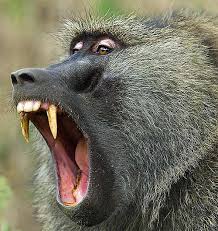
3. Baboon
a. Baboons live in sub-Saharan west and north Africa, very dry arid climates.
b. Baboons teeth are in an elongated arch shape with second and third molars that are much larger then the first molars.
c. The diet of the baboon consists of vegetation and small animals like hares and birds- these gave way to the evolution of their specific dentition.
d.
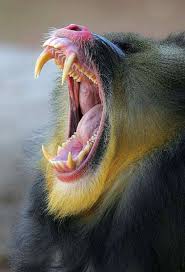
4. Gibbon
a. Gibbons live in tropical and subtropical rain forests of India, China, Islands of Sumatra, Borneo, and Java. Gibbons also reside in treetops.
b. Gibbons have large dagger-like canines in their upper and lower jaws.
c. The dentition patterns of the gibbon are adapted to eating meat.
d.
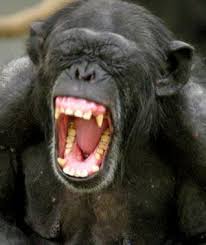
5. Chimpanzees
a. The common chimp lives in west and central and Africa while the Congo river separates them from the Bonobo chimpanzees. These chimpanzees live in any climate from rain forests to grasslands.
b. The chimpanzees have similar dentition patterns to humans: two incisors, one canine, two premolars, and three molars.
c. The chimpanzees dentition patterns are adapted to tearing meat off flesh.
d.
Summary:
The overall similarity that each group of primates share is that their dentition patterns evolve to help the primates adapt to their different habitats/environments.
1. Lemurs
a. Lemurs reside in tropical rain forest environment, mainly on the island of Madagascar.
b. Their teeth are heterodent; their bottom incisors and canine teeth are procumbent (outward pointing) making them good for grooming.
c. These dentition patterns are specific to lemurs due to their habitat and environment. Their teeth make it perfect for grooming and growing accustomed to Madagascar climate.
d.
2. Spider Monkey
a. The spider monkey lives in tropical rain forests of central and South America. Usually spider monkeys live high up in evergreen trees and rarely come down.
b. Spider monkeys have two sets of incisors, one set of canines, three sets of premolars, and three molars in each quadrant.
c. Since spider monkeys live in trees, their dentition patterns adapted to eating leaves and fruits.
d.
3. Baboon
a. Baboons live in sub-Saharan west and north Africa, very dry arid climates.
b. Baboons teeth are in an elongated arch shape with second and third molars that are much larger then the first molars.
c. The diet of the baboon consists of vegetation and small animals like hares and birds- these gave way to the evolution of their specific dentition.
d.
4. Gibbon
a. Gibbons live in tropical and subtropical rain forests of India, China, Islands of Sumatra, Borneo, and Java. Gibbons also reside in treetops.
b. Gibbons have large dagger-like canines in their upper and lower jaws.
c. The dentition patterns of the gibbon are adapted to eating meat.
d.
5. Chimpanzees
a. The common chimp lives in west and central and Africa while the Congo river separates them from the Bonobo chimpanzees. These chimpanzees live in any climate from rain forests to grasslands.
b. The chimpanzees have similar dentition patterns to humans: two incisors, one canine, two premolars, and three molars.
c. The chimpanzees dentition patterns are adapted to tearing meat off flesh.
d.
Summary:
The overall similarity that each group of primates share is that their dentition patterns evolve to help the primates adapt to their different habitats/environments.
Thursday, February 21, 2013
Homologous and Analogous Traits
Homologous Traits
Humans and bats share similarities in the forelimb bone structure. The bones in the hand are elongated into five fingers in the human and five claws in the bats. Although these two held the same trait, they use them for completely different purposes. Humans can do many things with their fingers while bats are limited to grabbing food or holding onto a tree. The common ancestor was a stem reptile because they held the trait. They have developed over years and their similarities are product of separate evolutionary processes.

Analogous Traits
Birds and butterflies both have wings that are used for flying, however their structure is completely different. These two are completely different species, one is an insect and one is a bird. Butterfly wings are made of skin and bones. Bird wings are made of muscle, bones, and feathers. Although they appear to be related due to wings, they only have a very remote ancestor. Birds evolved from reptiles, who had no wings, while the butterfly evolved from arthropod, with no wings.

Humans and bats share similarities in the forelimb bone structure. The bones in the hand are elongated into five fingers in the human and five claws in the bats. Although these two held the same trait, they use them for completely different purposes. Humans can do many things with their fingers while bats are limited to grabbing food or holding onto a tree. The common ancestor was a stem reptile because they held the trait. They have developed over years and their similarities are product of separate evolutionary processes.
Analogous Traits
Birds and butterflies both have wings that are used for flying, however their structure is completely different. These two are completely different species, one is an insect and one is a bird. Butterfly wings are made of skin and bones. Bird wings are made of muscle, bones, and feathers. Although they appear to be related due to wings, they only have a very remote ancestor. Birds evolved from reptiles, who had no wings, while the butterfly evolved from arthropod, with no wings.
Thursday, February 14, 2013
Wednesday, February 6, 2013
Historical Influences on Charles Darwin
I believe that Jean-Baptiste Lamarck had the most influence over Darwin's development of his theory of Natural Selection. Lamarck positively aided in Darwin creating his theory in several ways. Lamarck introduced the idea of a relationship between species and the environment around it. For example, "if the external environment changed, an animal's activity would also change to accommodate the new circumstances" (Introduction to Physical Anthropology). At first, "Darwin was influenced by Lamarck's writings early on while studying medicine at Edinburgh University" but after more studying, "Darwin did not agree with Lamarck that species evolve in an upward manner from lower to more advanced forms. By the 1840's Darwin disagreed with nearly all of Lamarck's theories, except for the ones regarding acquired traits" (http://www.aboutdarwin.com/people/people_01.html). The reason for Darwin to disagree with his idol's ideas was because of Lamarck's example with giraffe's and how they must stretch their necks to reach leaves on the tree, and then those stretched necks could be passed on to their children helped give the basic foundation to Natural Selection. Darwin states that genetics does not work in a way that a stretched neck could be passed down. Darwin suggests that if a giraffe has a short neck, then it would have a hard time surviving in a habitat with taller trees, therefore dying off, making way for giraffes with longer necks. Darwin went on to point out that the giraffes with the longer necks lived because they had better access to the limited sources, such as the leaves higher up on the trees. A significant point was that organisms with better access to resources will be more successful in their reproductive efforts. If a giraffe with a short neck lived in a habitat with tall trees, it would be hard for the giraffe to feed itself, let alone its offspring. If these shorter necked giraffes cannot get enough leaves to feed themselves, then that population dies off. If that population of short necked giraffes die off, then natural selection does not occur because reproduction hasn't occurred. Lamarck believes that giraffes who stretch their necks can pass that through their offspring, however that is not how genetics works. The shorter necked giraffes would reproduce and give birth to more shorter necked giraffes. Through these points, Darwin demonstrated that Lamarck's ideas were wrong and that they did not explain natural selection properly. Darwin could not have developed his theory of natural selection without Lamarck's ideas, however, because if he did not question them, and just believed them to be the truth, then natural selection would not have a proper definition. The attitude of the church affected Darwin mostly because of how afraid everyone was to speak up with their own ideas. He was forced to publish his book, however, because Alfred Russel Wallace had individually created his own idea of evolution, and Darwin had to compete to be the first to publish it and get credit for the theory. This led to the publication of his book On the Origin of Species.
Subscribe to:
Posts (Atom)